
The AI Shift: How AI Is Rewriting the Rules of Scale
For years, technology has been framed as a support function. A tool to improve productivity, automate routine tasks or enhance marketing performance. That framing no longer holds.
We are now in what can only be described as the AI assisted era. The pace of change is not incremental. It is exponential. And for founders, that changes the question from whether to adopt AI to how deeply and how quickly to integrate it into the core of the business.
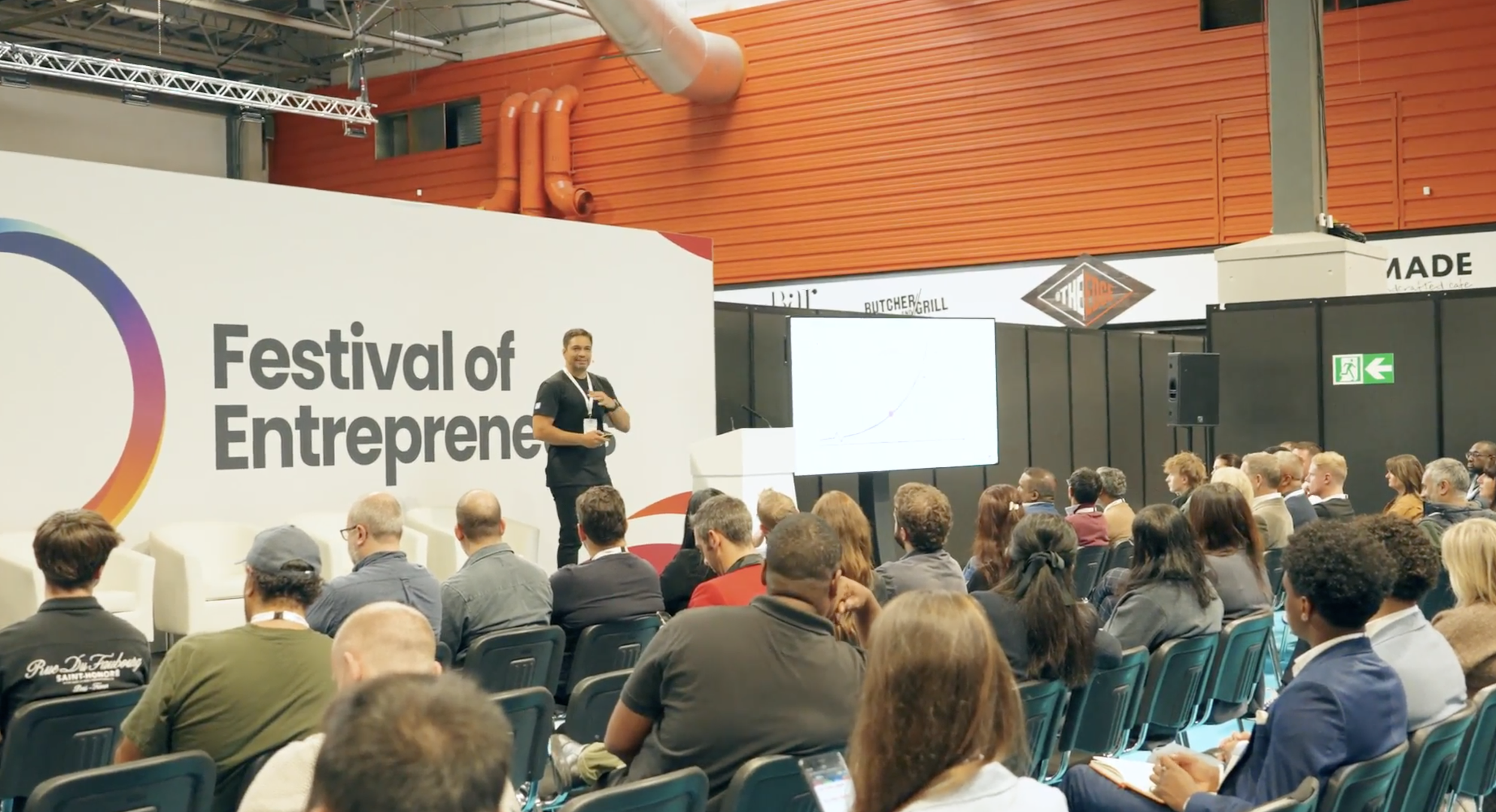
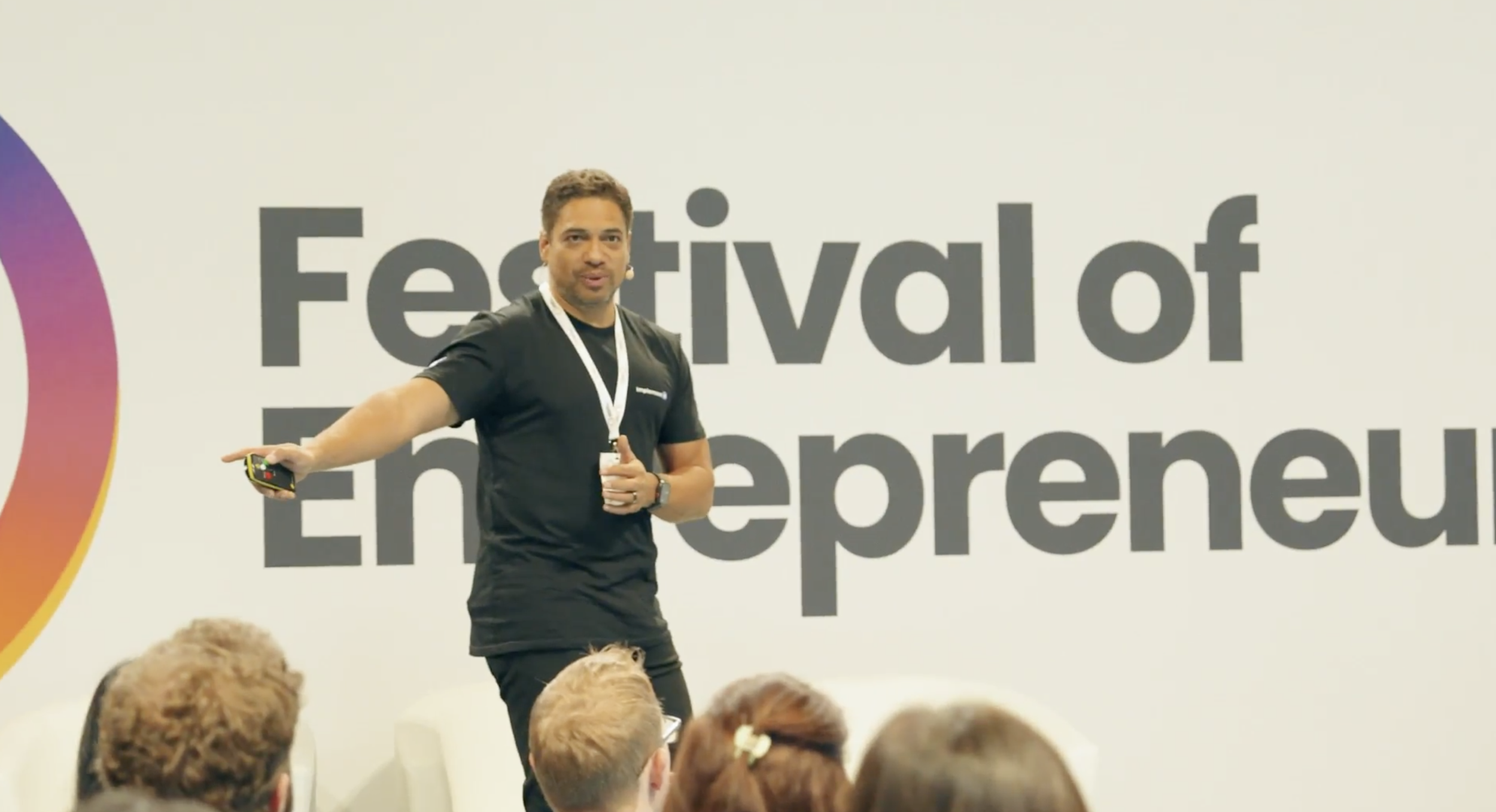
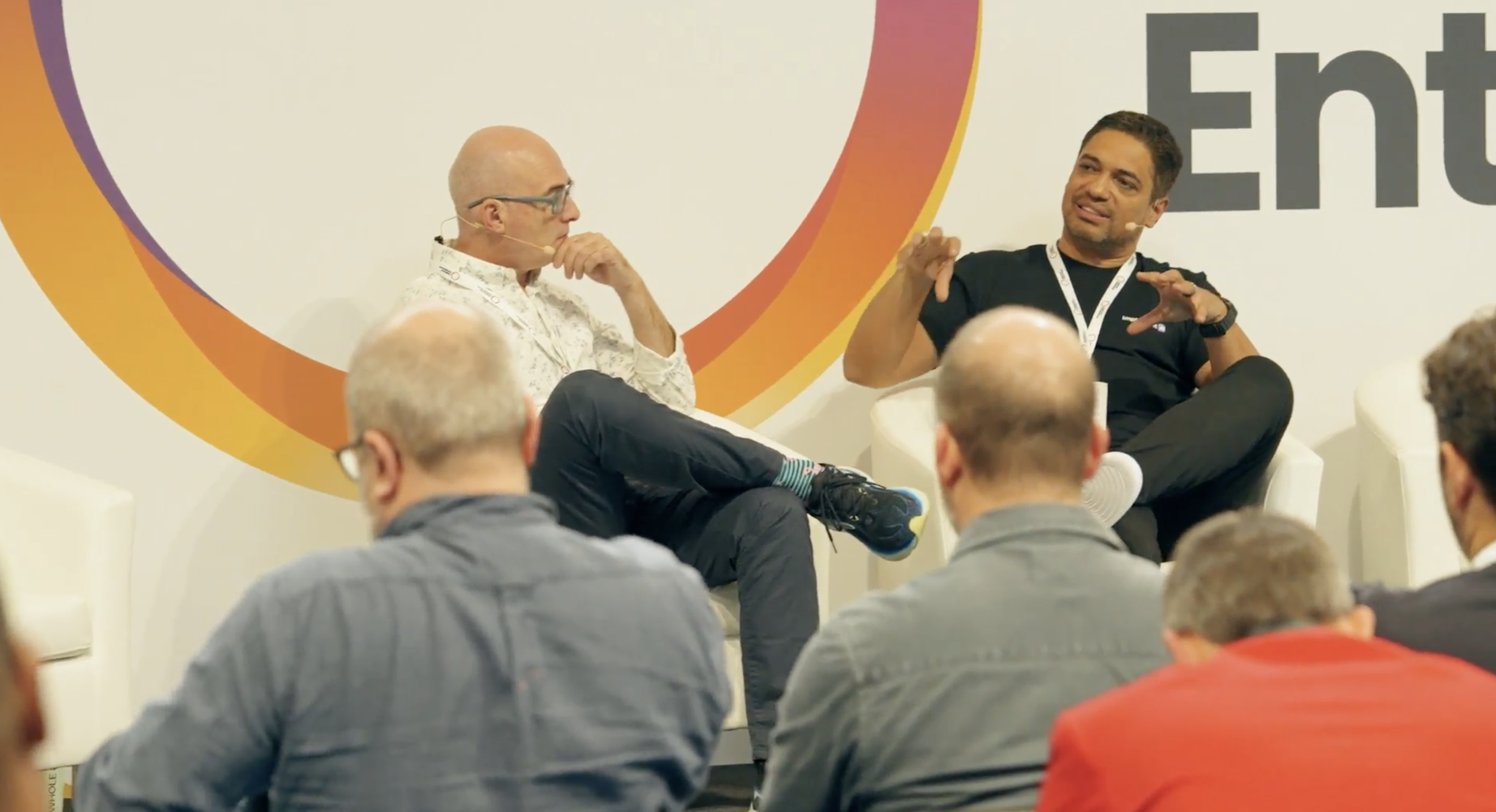
At the Festival of Entrepreneurs, Piers Linney focused on what this shift actually means in practical terms. Not theory. Not distant speculation. But what founders must do now if they intend to remain competitive over the next three to five years.
Speakers:
Piers Linney, co-founder of Implement AI

Exponential Change Is Already Underway
Every major industrial leap has shortened in adoption time. What once took over a century now happens in months. Platforms reach hundreds of millions of users in record time. Capabilities that felt experimental a year ago now feel mainstream.
AI development follows an exponential curve. Tools improve faster than most organisations can update their strategy decks. The danger is not that AI will one day disrupt your sector. It is that it is already reshaping it quietly, and competitors are embedding it while others hesitate.
Founders must recognise this is not about a single product feature or marketing channel. It is about a structural shift in how cognitive labour is performed. Marketing, analytics, customer support, research, compliance, recruitment and sales are all being reconfigured.
Waiting for perfect clarity is not a strategy.
Start With Augmentation, Not Replacement
The most useful way to approach AI is not through fear of job displacement but through augmentation.
AI performs best in environments where tasks are structured, repetitive and low to medium in variability. High velocity data analysis, lead qualification, first line customer enquiries, CRM enrichment, workflow automation and reporting are prime examples.
When used well, AI increases capacity without a linear increase in headcount. That is the real economic shift. Revenue can grow without cost bases expanding at the same rate.
This does not eliminate the need for people. It changes where their value lies. High judgement work, nuanced decision making, complex negotiation and edge case management remain human strengths. The opportunity is in pairing machine efficiency with human judgement.
Founders who understand this balance will scale more efficiently than those who either resist automation or attempt to remove humans entirely.
Revenue First, Cost Second
Many businesses approach AI as a cost saving tool. That is a narrow view.
The more compelling opportunity lies in revenue expansion. AI can analyse every recorded sales conversation, surface missed opportunities, identify patterns in objections and reactivate dormant leads at scale. It can personalise communication across thousands of customers simultaneously. It can operate out of hours without degradation in quality.
Hyper personalisation, once a marketing aspiration, is now technically feasible. A database of ten thousand customers can receive ten thousand tailored messages based on individual history and intent. That shifts marketing from broadcast to conversation.
For founders, the priority should be clear. Use AI to unlock top line growth. Once revenue scales, the margin expansion follows when cost growth remains controlled.
Think AI First When Designing New Workflows
Legacy systems are the greatest obstacle to adoption. Established businesses often struggle because they are constrained by processes, contracts, infrastructure and mindset built in a pre AI context.
If you were starting your business today, you would likely design it differently. Sales teams, support teams, compliance checks and data analysis would all incorporate digital workers from the outset.
That thought experiment is powerful. It allows founders to identify where AI can be embedded without attempting to rebuild everything at once.
Instead of asking how to add AI to your current workflow, ask what the workflow would look like if AI were native to it. The answers often reveal inefficiencies that have been accepted for years.
Human Skills Still Matter
As capabilities improve, it is tempting to assume that AI will replicate every aspect of human interaction. In many cases, it already approximates empathy, tone and conversational nuance to a surprising degree.
Yet authenticity is not replaced by automation. Brand voice, values and strategic judgement remain human responsibilities. AI can be trained to express tone consistently, but founders must define what that tone is and why it matters.
The shift is not towards a machine only world. It is towards machine enhanced leadership. Founders who deepen their own fluency with AI tools gain a cognitive advantage. Writing, research, scenario planning, financial modelling and strategic thinking can all be augmented.
One of the clearest pieces of advice for founders is simple. Use AI personally before attempting to roll it out organisation wide. Become proficient. Test it. Stress it. Understand its limits. The insights gained will shape better implementation decisions.
Regulation Will Lag. Leadership Cannot
Regulatory frameworks will struggle to keep pace. Legislation operates in linear cycles. AI development does not.
That does not remove the responsibility to act ethically or responsibly. It does mean founders cannot rely on external guardrails to dictate timing. Competitive pressure will not wait for perfect clarity from regulators.
The realistic horizon for meaningful business impact is three to five years. Within that window, companies that embed AI deeply into operations will widen the performance gap.
Those that treat it as optional will find themselves outpaced.
The Founder’s Decision
Every founder faces a choice this year. Not whether AI will matter. But whether to lead its integration or respond to it later.
The practical first step is not large scale transformation. It is personal adoption. Use advanced models. Integrate them into daily thinking. Record and analyse conversations. Identify repetitive workflows. Pilot voice, analytics and enrichment tools in contained environments.
From there, build deliberately.
The AI shift is not about novelty. It is about scale. The businesses that thrive will be those that detach revenue growth from linear cost expansion while preserving the human judgement that defines strong leadership.
The curve is steepening. The question is whether you are on it.