
Weekly Founder Highlights 02/06
This week’s conversations returned to a recurring theme. Growth is not driven by noise, speed, or shortcuts. It is shaped by values, systems, and the quality of decisions founders make when pressure increases.
Across policy, leadership, performance, and culture, a consistent message emerged. Sustainable businesses are built by founders who understand where value is created, protect what matters, and design their organisations to hold up over time.
Value is created by businesses, not policy alone
A clear reminder this week was that the UK economy is powered by founders and businesses operating in the private sector. Jobs, innovation, and long-term value are created by people building companies on the ground, not at the edges of policy debate.
When economic conversations drift too far from this reality, friction builds. Founders feel it first. Access to capital, regional investment, and the retention of intellectual property all play a role in whether businesses are able to scale or stall.
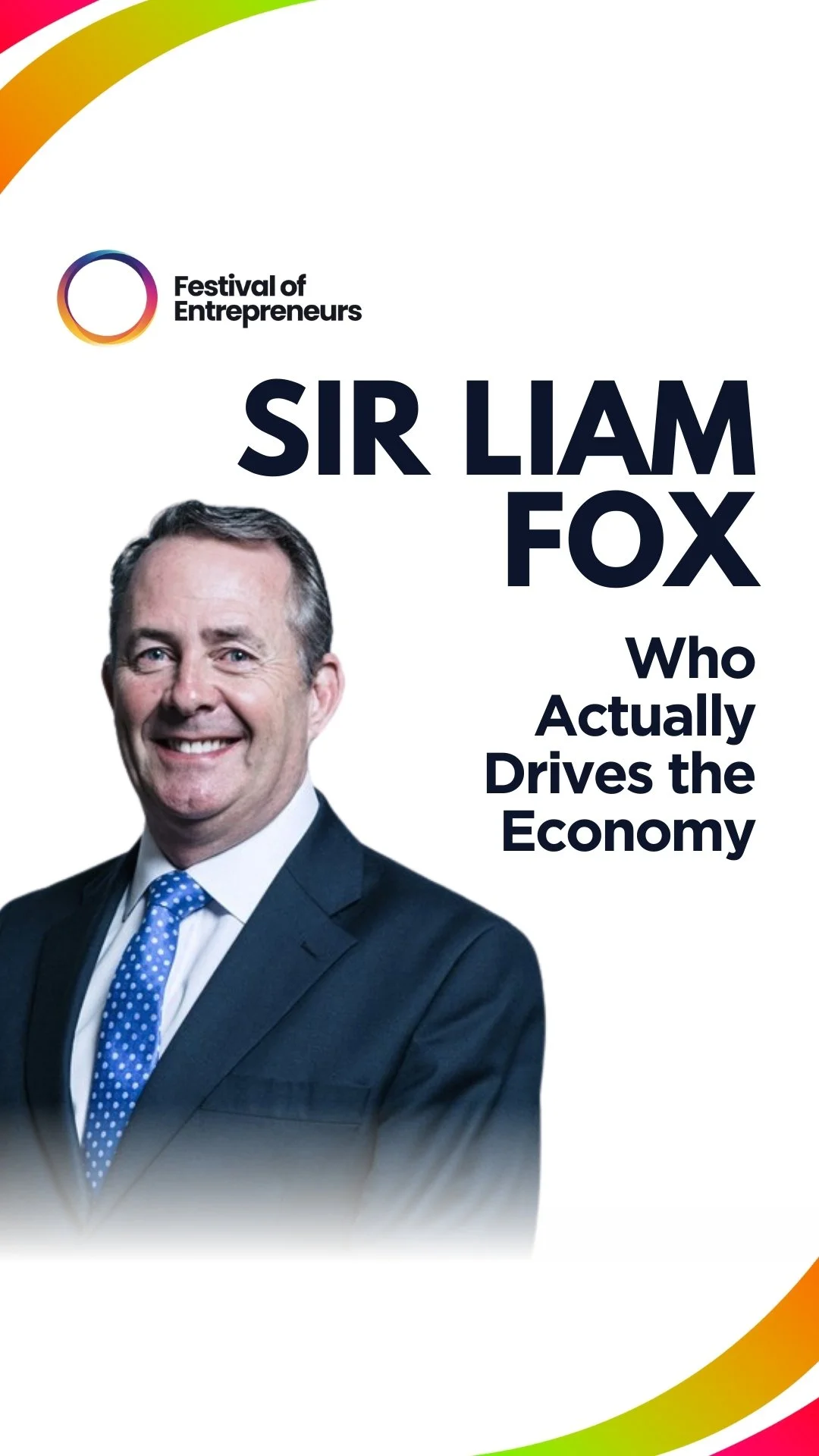
The takeaway is not ideological. It is practical. If the system wants more scale-ups, it needs to support them at the moment they are ready to grow, not after momentum has already been lost. Check out this snippet from Sir Liam Fox, during Festival of Entrepreneurs 2025 opening day.
Focus sharpens when founders stop adding
One of the quieter but more powerful reflections this week was around subtraction. Focus improves when founders stop doing things that no longer serve the business.
A meeting. A habit. A distraction. Removing even one source of friction can have an outsized effect on clarity and momentum.
This approach requires confidence. It also requires regular reflection. Growth stages change, and behaviours that once helped can later hold the business back.
Founders who review what they stop doing as often as what they start tend to stay sharper as responsibilities increase.
Values shape outcomes long before funding does
One of the strongest lessons this week centred on restraint. Not all capital is equal. Growth that compromises values often carries hidden costs that surface later.
Founders who are clear on what they stand for are better positioned to make difficult decisions, including saying no to money that comes with misaligned conditions. That discipline protects quality, culture, and long-term value, even when faster growth appears tempting.

As Sandra Bryne said in this latest episode of Screw It Just DO It, values are not branding statements. They are filters for decision-making. When used consistently, they reduce regret and preserve integrity as the business grows.
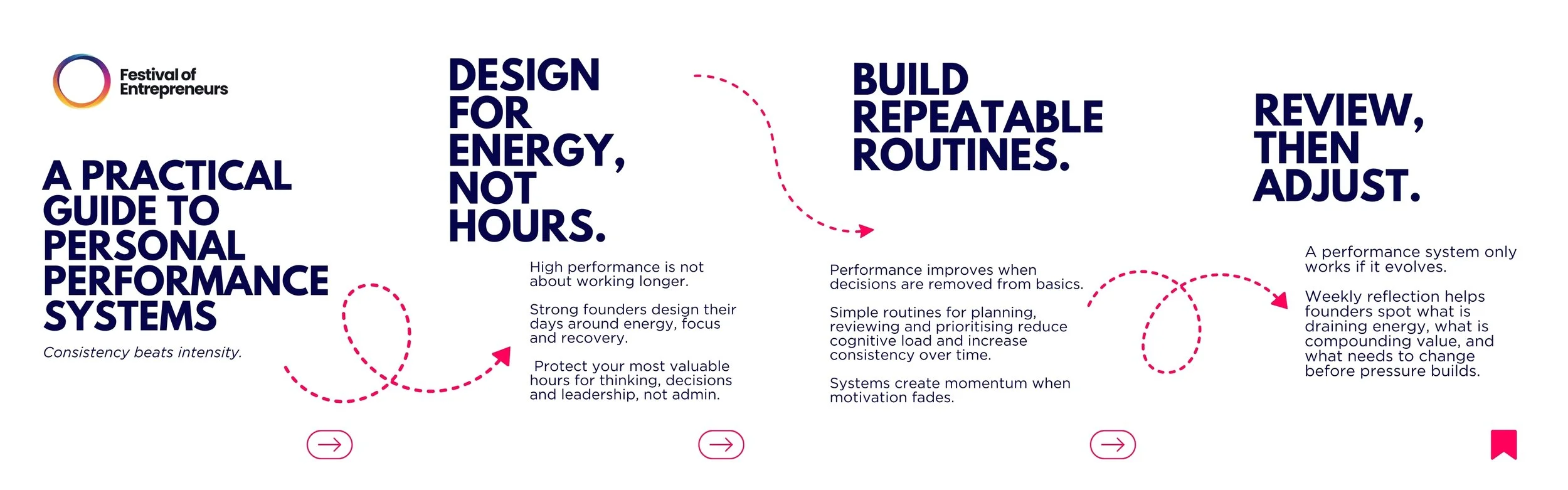
Performance improves through systems, not intensity
Another recurring insight was that personal performance is not about working harder. It is about working with intention.
Founders who rely on intensity alone often burn out just as complexity increases. Those who build systems to support clarity, energy, and consistency tend to make better decisions over longer periods.
Simple routines, clear priorities, and fewer distractions matter more than elaborate optimisation. Removing friction improves focus faster than adding more tools or commitments.
The most effective founders treat their own performance as an asset that needs structure, not constant pressure.
The ecosystem must match founder ambition
A recurring frustration surfaced around scale. Many UK businesses stall between £1 million and £10 million in turnover, not due to lack of ambition, but because the ecosystem struggles to support them at speed and scale.
Innovation is happening well beyond London. Founders across the country are building meaningful businesses. The challenge lies in connecting capital, capability, and opportunity quickly enough when growth accelerates.
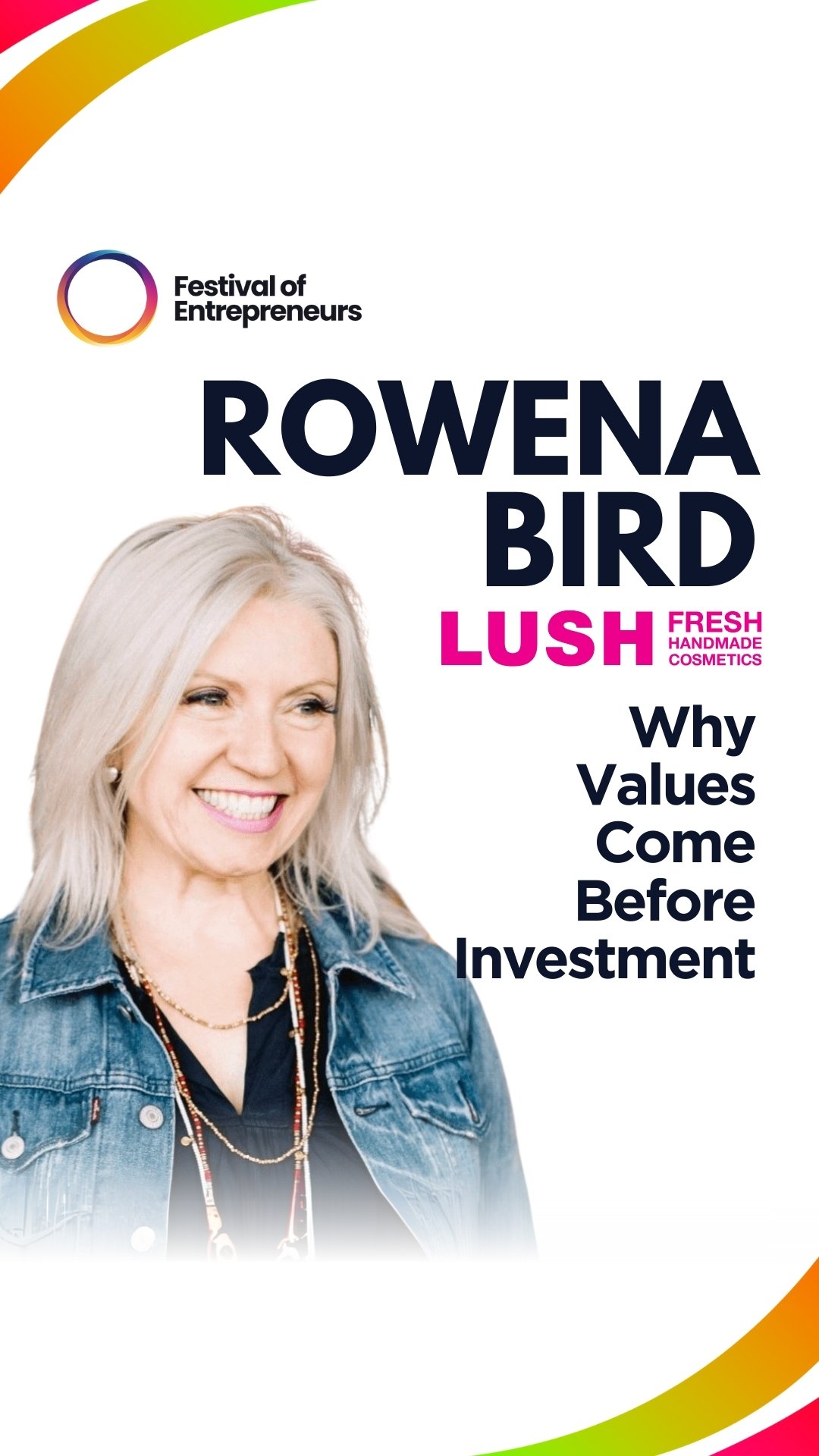
The message from Rowena Bird, co-founder of LUSH, was straightforward. If founders are expected to work relentlessly to scale, the systems around them need to keep pace.
Closing thought
This week’s highlights point to a steady truth. Progress is shaped by judgement, not urgency. Values, systems, and clarity matter most when decisions are hardest.
Founders who build with intention, protect their standards, and focus on long-term strength give themselves the best chance of sustainable growth.
Momentum comes and goes. What endures is the quality of the foundation underneath it.